


Vigan City, located in Ilocos Sur, Philippines, is a captivating destination renowned for its well-preserved Spanish colonial architecture. The city's historic core, a UNESCO World Heritage Site, showcases cobblestone streets, ancestral houses, and grand churches that transport you back in time. Vigan's unique blend of Filipino, Chinese, and Spanish influences is evident in its architecture, cuisine, and cultural traditions, offering visitors a glimpse into a rich and diverse heritage.

Beyond its architectural wonders, Vigan boasts a vibrant culture and a warm, welcoming atmosphere. The city comes alive during festivals and celebrations, showcasing the Ilocano people's colorful traditions and artistic talents. Vigan's culinary scene is a must-try, with its delectable Ilocano dishes that tantalize the taste buds. From the iconic empanada to the flavorful bagnet, Vigan's food offerings are a testament to the region's rich agricultural heritage.

Exploring Vigan is like stepping into a living museum, where every corner tells a story. Whether you're strolling along Calle Crisologo, visiting the Syquia Mansion, or simply soaking in the city's charm, Vigan offers an unforgettable experience that will leave you in awe of its beauty and heritage.
REFERENCE:
https://i.pinimg.com/736x/55/10/f0/5510f01004e607dca8efecc23fcc752b.jpg
https://i.pinimg.com/736x/81/53/a2/8153a247ee898a19c660316ed92b4ca6.jpg
Christmas holidays are a time of joy, celebration, and
family bonding. My experiences during this festive season have always been a
blend of traditional activities, personal reflection, and community
involvement. Each year, the anticipation builds as December approaches,
signaling the start of a magical time filled with warmth, happiness, and love.
One of the most cherished aspects of the Christmas holidays is the time spent
with family. In recent years, my family has developed certain traditions that
bring us together. We typically start decorating our home right after
Thanksgiving. This practice creates a spirit of excitement and creativity.
Moreover, preparing for Christmas dinner is another
highlight. We gather in the kitchen to cook together, exchanging recipes that
have been passed down through generations. Each year, we try to incorporate new
dishes along with our traditional favorites, which makes the meal even more
special. Through this process, we learn from one another and celebrate each
other's cooking skills. It is a time of laughter and joy, emphasizing the
importance of family unity during the holidays.
In conclusion, my experiences during the Christmas holidays have shaped my
values and beliefs profoundly. The time spent with family, the joy of
tradition, and the spirit of giving have all contributed to a meaningful
celebration. Every holiday season, I am reminded of the importance of love,
gratitude, and community. As we look forward to the upcoming Christmas
celebrations, I believe that these experiences and traditions will carry on,
creating cherished memories for years to come. The Christmas holidays truly
exemplify the essence of togetherness and empathy, making them a significant
part of my life.

Throughout my Grade 10 ICT Q2 lessons, I had the opportunity to explore a variety of essential concepts, skills, and tools that are becoming increasingly relevant in our technology-driven world. The lessons were designed to introduce us to foundational skills such as coding, web development using HTML, and other aspects of digital literacy. Reflecting on these lessons, I can confidently say that they not only enhanced my technical abilities but also expanded my understanding of how technology shapes and influences our daily lives.
One of the most engaging topics I explored in Grade 10 ICT was HTML (HyperText Markup Language). HTML is the standard language used to create web pages, and learning it opened up a whole new world for me. At first, the idea of writing code for a webpage seemed intimidating, but as we went through lessons step by step, I began to understand how simple tags and structures combine to create visually appealing and functional websites.
I learned how to create headings, paragraphs, links, and images, all of which are essential components of a web page. The concept of structuring content using elements like <p>, <i>, and others made me realize how the visual arrangement of content on a webpage is carefully crafted. HTML also introduced me to the importance of semantic elements, like <u>, <b>, and <br>, which improve both the user experience and accessibility of websites.
By the end of our HTML lessons, I was able to design basic webpages that looked professional and functioned as intended. This skill was empowering because I could now apply my knowledge to real-world projects, such as creating my own personal website or helping others build simple web pages.
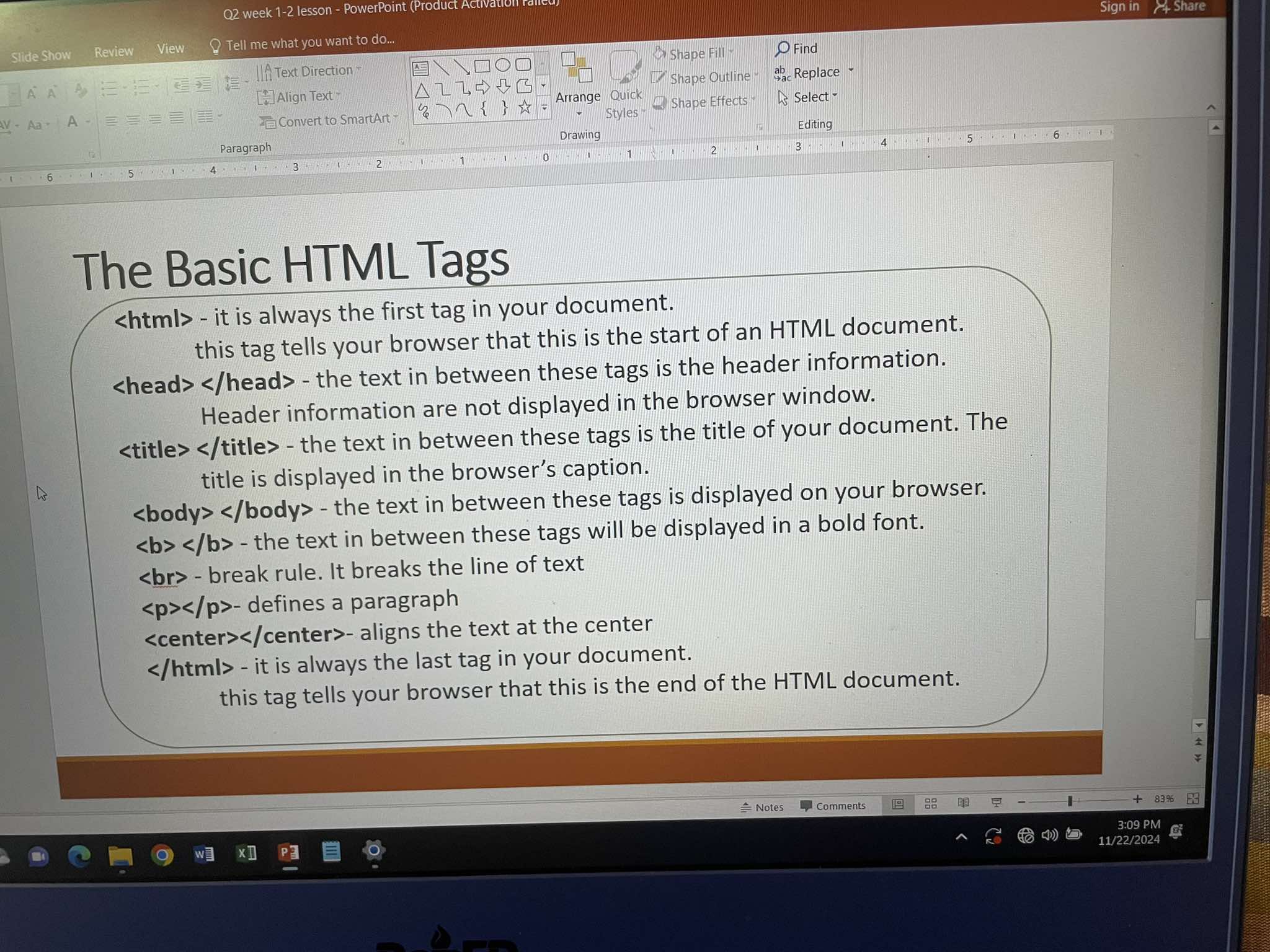
In addition to coding and HTML, our ICT lessons also covered other aspects of digital literacy, such as internet safety, ethics in technology, and the importance of protecting personal data. These lessons were particularly important in today's digital age, where information is easily accessible, but security and privacy are often at risk. Learning about how to stay safe online, avoid scams, and protect personal information has been vital for me as a student and as a user of digital tools.
The lessons on ethical technology use also helped me understand the broader implications of the digital world. For example, we discussed issues like intellectual property, plagiarism, and the ethical considerations involved in software development. These topics made me realize that technology is not just a tool, but a force that can have both positive and negative consequences depending on how it is used.

Looking back on the ICT lessons of Grade 10, I feel that they have equipped me with essential skills that will be useful in many future endeavors. The knowledge of HTML and coding has sparked a genuine interest in technology, and I am excited to explore more advanced concepts in the future. Whether it is creating websites, developing applications, or working with data, I now have the foundational knowledge to pursue these interests further.
Moreover, the lessons on digital literacy have made me more aware of the ethical and practical considerations involved in technology use. I now approach technology with a more critical mindset, understanding that it is important to use these tools responsibly and thoughtfully.
In conclusion, Grade 10 ICT lessons have provided me with valuable skills that go beyond the classroom. The lessons on coding, HTML, and digital literacy have not only made me more proficient in technology but have also broadened my perspective on how technology can shape the world around us. I am grateful for the opportunity to learn these skills and look forward to continuing to build on them in the future.
Every day, countless women around the world experience some
form of violence—whether physical, emotional, or sexual. In the Philippines, 1
in 5 women has faced violence from an intimate partner, a statistic that
highlights the urgent need for change. National Women’s Month and the 18-day
Campaign to End Violence Against Women remind us of the critical role we
all play in standing against this injustice. This campaign serves not only as a
call for awareness but also as a call to action. The Anti-Violence Against
Women and Children Act (RA 9262), alongside other key laws, forms the
foundation of a system that protects women and children from abuse and
violence. This thematic output explores these laws and their importance in
creating a society where women can live free from fear and violence.

To begin with, the Anti-Violence Against Women and
Children Act (RA 9262), enacted in 2004, represents a significant leap
forward in recognizing and addressing the multifaceted nature of violence
against women and children. Prior to this law, there was no comprehensive legal
framework that directly addressed domestic violence, including physical,
sexual, emotional, and economic abuse. RA 9262 provides a holistic approach to
protecting women and children in abusive relationships, especially those who
are unable to escape due to fear, dependence, or lack of resources.
A key feature of this law is the Protection Order
system, which enables victims to legally separate themselves from their abusers
and seek refuge. Protection Orders can restrict an abuser’s access to the
victim, mandate child custody arrangements, and ensure the provision of
financial support. This legal remedy is crucial in cases where victims are
trapped in abusive environments, unable to find immediate help or escape.
In light of this, RA 9262 plays a pivotal role in the
18-day Campaign to End Violence Against Women. It serves as both a
deterrent and a lifeline, sending a clear message that the law recognizes
violence against women as a serious crime, and that there are legal recourses
available for survivors. The ongoing implementation of this law is an essential
part of shifting societal attitudes toward domestic violence, encouraging
survivors to speak up and seek justice without fear of retaliation.
However, RA 9262 is not the only law in place to
address violence against women. In addition to this, two other critical laws
provide substantial legal support for women facing various forms of violence: RA
8353 (The Anti-Rape Law of 1997) and RA 11313 (The Safe Spaces Act of
2019). These laws are vital in addressing specific aspects of violence that
often go unreported or unaddressed, contributing to the larger fight against
gender-based violence.
First, the Anti-Rape Law of 1997 (RA 8353) was a
groundbreaking piece of legislation in the Philippines. Notably, it not only
redefined rape as a violent crime but also expanded its scope to include all
forms of sexual penetration, regardless of the perpetrator’s gender or the
victim’s relationship to the offender. This law acknowledges that rape is not
just a sexual act, but an act of violence that deeply affects the physical and
emotional well-being of the victim.
Furthermore, the law introduced the concept of psychological
trauma as an essential element in prosecuting rape cases. In addition, it
criminalized marital rape, empowering wives to seek justice if their
husbands sexually abuse them. The law streamlined the process for reporting and
prosecuting rape, making it easier for victims to file complaints without the
fear of being blamed or stigmatized.
In the context of the 18-day Campaign, RA 8353
is essential in addressing one of the most violent forms of abuse women face.
Its passage was a landmark in recognizing that rape, regardless of the context,
is an indefensible crime and that survivors deserve legal protection and the
right to seek justice. As such, the law encourages women to report such crimes
and ensures that they are supported throughout the judicial process.
Additionally, the Safe Spaces Act (RA 11313), enacted
in 2019, aims to protect women and members of the LGBTQ+ community from
harassment in public spaces. Commonly known as the “Bawal Bastos” law,
it tackles an often-overlooked form of violence: public harassment.
Women routinely face catcalling, inappropriate comments, and physical advances
in streets, workplaces, and public transport. RA 11313 makes such actions
punishable by law and provides victims with the tools to report these
incidents.

https://philippinelawfirm.com/other/understanding-the-safe-spaces-or-the-bawal-bastos-law/
Moreover, this law is particularly important because it
recognizes that women’s safety extends beyond the home. The Safe Spaces Act
not only criminalizes verbal and physical harassment but also promotes public
awareness and encourages social change by mandating education campaigns
about respect for boundaries and mutual consent. In addition, public
institutions and businesses are required to establish safe spaces for
women, creating environments where they are free from harassment.
In a similar vein, the Safe Spaces Act is a crucial
part of the 18-day Campaign to End Violence Against Women. By addressing
harassment in both physical and online spaces, it ensures that
women are protected across various settings, acknowledging the growing issue of
cyberbullying and online sexual harassment. This law serves as a powerful
reminder that women’s safety cannot be confined to the home but must extend to
all spaces where they live, work, and interact.
In conclusion, the 18-day Campaign to End Violence
Against Women serves as a critical reminder that while significant legal
protections exist, the battle against violence is far from over. RA 9262
(The Anti-Violence Against Women and Children Act), RA 8353 (The
Anti-Rape Law), and RA 11313 (The Safe Spaces Act) are three pillars of
legal protection that play an indispensable role in safeguarding the rights and
dignity of women. These laws not only provide legal recourse but also help
foster a culture of respect, safety, and equality.
By highlighting the importance of these laws during the 18-day
Campaign, we take a step closer to a society where violence against women
is not tolerated, and every woman and child can live free from fear and
oppression. In this way, the continued awareness and education surrounding
these laws are necessary to ensure that more women have the courage to come
forward, speak out, and seek justice. Ultimately, only through a united effort
can we create a safer, more just world for women, empowering them to lead lives
free of violence
This day in 1890, Elpidio Quirino y Rivera was born in Vigan, Ilocos Sur, and baptized three days later. He was the son of Don Mariano Quirino, who was originally from Caoayan, Ilocos Sur. Mariano was an excellent soldier who earned the rank of sargento contador, the highest position that a native could hold in the colonial army and was said to have been sent to Spain for training. He later took over his father’s trading business and served as the warden of the Vigan provincial jail. In Agoo, La Union, he met and married a 14-year-old by the name of Gregoria Rivera y Mendoza. While the Quirino family has claimed that Gregoria Rivera was supposedly a Spanish mestiza, the baptismal record of Elpidio states clearly that his mother was an india, not a mestiza.
Elpidio Quirino’s career began with his election as a member of the House of Representatives from Ilocos Sur’s 1st district in 1919, serving until 1925. He ran for and won as a senator in 1925, serving 10 years. He was appointed secretary of the Interior by President Manuel L. Quezon from 1935 to 1938. Although he was again elected senator, he was unable to serve because of the outbreak of World War II. After the country’s liberation, he was elected president pro tempore of the Senate. He became the running mate of Manuel A. Roxas in the 1946 elections and was elected vice president. He then became president of the Philippines, serving the remainder of President Roxas’s term after Roxas passed away, and then winning a fresh mandate in 1948, with Fernando Lopez as vice president. He ran for reelection in 1953 but was defeated by Ramon Magsaysay.
Although he served longer than both his predecessor and successor, Quirino is not as well-remembered. His presidency saw many historic moments; he was the first Philippine president to visit the United States since we became fully independent; Carlos P. Romulo was elected president of the UN General Assembly, the first Asian to hold this distinction; and Quezon City was made the country’s capital, replacing Manila. Though the nation was facing new issues, the country had positive projections. Economic recovery advanced successfully and development opportunities were expanding. In actuality, the Philippines was in a good position to succeed by 1953.

https://en.wikipedia.org/wiki/Elpidio_Quirino

National Indigenous Peoples Month and the 27th Year Commemoration of the Indigenous Peoples Rights Act (IPRA) are vital observances that aim to promote and protect the rights and culture of Indigenous Peoples (IPs) in the Philippines. The theme for 2024, “Mga Katutubo at Katutubong Dunong: Pahalagahan, Pangalagaan at Parangalana” (Valuing, Nurturing, and Honoring Indigenous Peoples and Indigenous Knowledge), highlights the importance of preserving the unique cultural identities, traditions, and knowledge of IP communities. Through this observance, the Philippine government and society at large are reminded of the importance of supporting and upholding the rights of Indigenous Peoples, which include the right to their ancestral lands, self-determination, and the preservation of their cultural heritage.
In conclusion, National Indigenous Peoples Month promotes the celebration of Indigenous Knowledge Systems and Practices (IKSP), which are essential for environmental sustainability and community well-being. By valuing and honoring these traditional knowledge systems, the observance encourages the protection of these practices for future generations. It fosters a society that not only acknowledges the contributions of Indigenous Peoples to the nation's cultural richness but also ensures that their rights are respected and protected. Ultimately, this month-long commemoration plays a crucial role in empowering Indigenous communities, fostering respect for their cultures, and working towards a more inclusive and just society.
The Philippines, an archipelago nation nestled in the heart
of the Pacific, is acutely vulnerable to the impacts of climate change. The
country's geographic location, characterized by its vast coastline and numerous
islands, makes it susceptible to extreme weather events such as typhoons,
floods, and droughts. These events, intensified by climate change, have
devastating consequences for Filipinos, disrupting their livelihoods,
displacing communities, and exacerbating poverty. The predominant reasons for
these sudden or progressive environmental changes are multifaceted, stemming
from both natural and human-induced factors.

Climate Change Impacts Severely Impede SDGs, Says ADB–UN
Report
Retrieved at
https://www.adb.org/news/climate-change-impacts-severely-impede-sdgs-says-adb-un-report
One of the primary drivers of climate change in the Philippines is the global rise in greenhouse gas emissions, primarily from the burning of fossil fuels. These emissions trap heat in the atmosphere, leading to a gradual warming of the planet. This warming effect triggers a cascade of changes in the climate system, including increased sea levels, more frequent and intense extreme weather events, and shifts in precipitation patterns. These changes directly impact the lives of Filipinos, particularly those living in coastal areas and relying on agriculture for their livelihoods. Rising sea levels threaten coastal communities with erosion, flooding, and saltwater intrusion, displacing residents and damaging infrastructure. Extreme weather events, such as typhoons, cause widespread damage to crops, homes, and infrastructure, leading to economic losses and displacement.

Climate Change Impact on the Philippines
Retrieved at
https://pinaywise.com/philippines-facts/climate-change-impact-on-the-philippines/
Furthermore, deforestation and unsustainable land use practices contribute to the vulnerability of Filipinos to climate change. Deforestation reduces the capacity of forests to absorb carbon dioxide, exacerbating the greenhouse effect. It also diminishes the protective barrier provided by forests against erosion, landslides, and floods. Unsustainable agricultural practices, such as monoculture and the use of chemical fertilizers, degrade soil quality and reduce its ability to retain water, making communities more susceptible to droughts. These factors, combined with the effects of climate change, create a vicious cycle of environmental degradation and social vulnerability. As a result, Filipinos are increasingly facing challenges related to food security, water scarcity, and displacement, highlighting the urgent need for sustainable solutions and adaptation strategies to mitigate the impacts of climate change.

Climate Change and the Vulnerability of the Philippines
Retrieved at
https://climateadaptationplatform.com/climate-change-and-the-vulnerability-of-the-philippines/
The 2024 National Children's Month celebration, themed
"Break the Prevalence, End the Violence: Protecting Children, Creating a
Safe Philippines," underscores the urgent need to address the pervasive
issue of violence against children in the Philippines. This theme serves as a
powerful call to action, urging all sectors of society to unite in their
commitment to safeguarding the well-being and rights of every child. The
prevalence of violence against children, in all its forms, is a grave violation
of their fundamental human rights and a serious threat to their physical,
emotional, and psychological development. It is imperative that we recognize
the multifaceted nature of this issue, encompassing physical, sexual,
emotional, and neglectful abuse, as well as exploitation and trafficking.

To effectively break the prevalence of violence against children, a multi-pronged approach is essential. This involves strengthening legal frameworks and policies, enhancing law enforcement capabilities, and promoting awareness and education within communities. It is crucial to empower children to recognize and report abuse, while providing them with access to appropriate support services and counseling. Furthermore, fostering a culture of respect, empathy, and non-violence is paramount. This can be achieved through comprehensive education programs that promote positive parenting practices, conflict resolution skills, and gender equality. By fostering a society where children are valued, protected, and empowered, we can create a safer and more just environment for all.

How to explain what faith means to children
Retrieved at
https://www.youthworks.net/articles/how-to-explain-what-faith-means-to-children
The 2024 National Children's Month celebration presents a unique opportunity to galvanize collective action toward ending violence against children. It is a time for reflection, dialogue, and commitment. By working together, we can break the cycle of violence, create a safe and nurturing environment for all children, and build a Philippines where every child can thrive and reach their full potential. This is not merely a responsibility but a moral imperative. It is time to stand united in our unwavering commitment to protecting children and creating a future where every child can live a life free from fear and violence.

Children royalty-free images
Retrieved at
https://www.shutterstock.com/search/children

This photo shows here that I am planting a tree,
contributing to environmental conservation. By adding greenery, helping combat
climate change, promote biodiversity, and support a healthier planet.

The photo describes that I am recycling bottle lid, i
actively contribute to environmental protection by reducing waste, conserving
natural resources, and lowering energy consumption. Recycling helps decrease
pollution and minimizes the need for new raw materials, promoting a sustainable
lifestyle and a healthier planet for future generations.

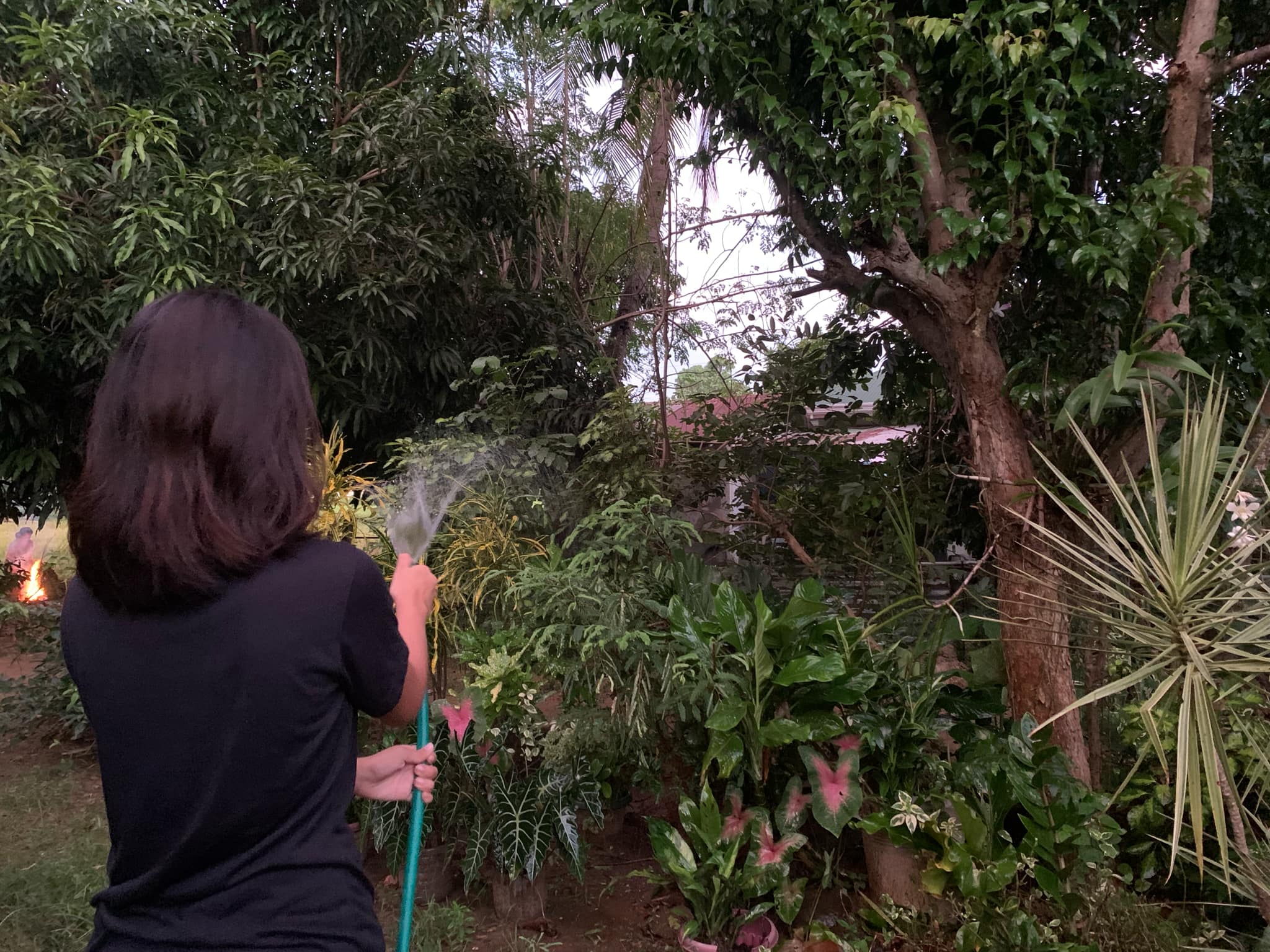
The view of trees, with their towering trunks and lush canopies filtering sunlight, not only creates a breathtaking natural landscape but also contributes significantly to environmental protection by absorbing carbon dioxide, improving air quality, preventing soil erosion, supporting biodiversity, and cooling urban areas.
During the first quarter of Grade 10, I gained many valuable
insights and knowledge. I deepened my understanding of various subjects such as
math, science. In math, I learned new formulas in arithmetic sequence and more.
Science introduced me to more complex topics such as plate boundaries and all
of the theories on how the continents move. Additionally, I discovered new ways
of learning, including collaborative group work, which helped me see things
from different perspectives. Beyond academics, I learned how important time
management and self-discipline are to keep up with my responsibilities.
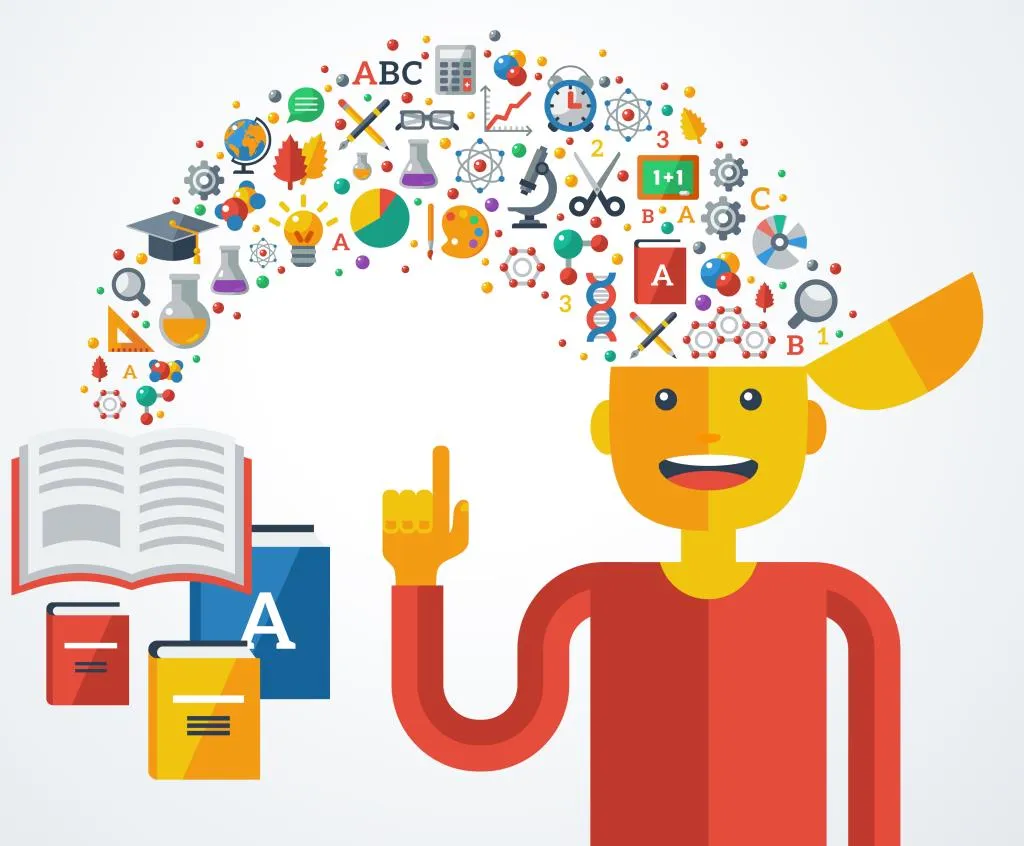
How to Learn Effectively : Understanding Learning Process
Retrieve at
https://medium.com/@wafi.harowa/how-to-learn-effectively-understanding-learning-process-2d29e9829bc2
One of the
significant challenges I faced was managing the workload from different
subjects. There were times when multiple projects and assignments were due at
the same time, which made it overwhelming. Another challenge was understanding
some of the more complex topics in math, science, and other subjects, which took more time and
effort to fully grasp. Balancing academics with extracurricular activities and
personal commitments was also a struggle.

Effective Ways to Deal with Difficult People in Your Life
Retrieve at
For the challenges, I
focused on improving my skills in managing time. I put up a schedule so that I
had a priority list of tasks and set a deadline to ensure that I didn't fall
behind. In case it was a tricky subject, then I often sought help from my
teachers and peers, joined study groups, and asked questions in case I didn't
understand a certain concept or question. I made use of available online
resources and reviewed materials to cement the learning process. Short breaks
with caring for myself helped the burnout not happen and kept me motivated to
go forward.

Shutterstock
Retrieve at
I will be a dentist,
a decision rooted in my desire to improve people's health and confidence. As I
reflect on this journey, I realize that my experiences have equipped me with
the empathy and skills necessary for this profession. I envision a future where
I can leverage advancements in dental technology to provide the best care
possible. Beyond just treating teeth, I aim to educate patients about
preventive care, fostering a sense of ownership over their oral health. I am
excited about the opportunity to build lasting relationships with my patients
and contribute to a healthier community, making a meaningful difference one
smile at a time.

Study dentistry
Retrieved at
https://www.aeccglobal.com.ph/popular-courses/dentistry
What is the Kannawidan Festival? The Kannawidan Festival is a remarkable cultural fiesta held annually in Ilocos Sur, which is one of the pr...


